Squeaksrus.com


The Squeaky Care Info
Table of Contents
Click the buttons below to go directly to that chapter
The best way to prolong the life of your squeaks is proper care.
Keeping them clean, free of dust, skin oils, bodily fluids and other environmental contaminates.
Always clean before storage, that way contaminates are not trapped against the vinyl where it can cause degradation, try not to store them in direct contact with other squeaks, store in a white soft 100% cotton pillow case or sheet.
Also, do not fold squeaks, plasticizer will migrate to the folds, best practice is to roll them loosely for storage.
SOAPS
We use a inexpensive shampoo with natural additives. when diluting it 4:1 (4 parts water 1 part soap) it provides a good cleansing ability without causing plasticizer issues.
For safe cleaning, use warm water and a mild non detergent soap, if using shampoo look for one with no conditioners or chemical scents.
How to Clean Safely
Dilute: Mix a few drops of soap in warm water, if using a spray bottle, dilute at a ratio of at least
4:1 {4 parts water to 1 part soap}
Gently Wash: Wipe the PVC surface gently using a soft microfiber cloth.
Rinse thoroughly: Always follow up by rinsing with clean fresh water, Keep in mind, most municipal water supplies contain high amounts of chlorine.
Air Dry: Allow the squeak to dry in a well-ventilated area.
*****Ratio Explanation*****
In a 16oz / 473 ml spray bottle put 3oz / 88 ml of soap to 12 oz / 354 ml of clean water.
What is Plasticizer; Plasticizers are compounds that increase the plasticity or decrease the viscosity of a material. The most common plasticizer used in PVC is phthalates. When added to PVC, they space out the polymer chains, making the material more flexible.
Non Phthalate Plasticizers; Non-phthalate soft flexible PVC plasticizers are additives that increase flexibility and workability in polyvinyl chloride (PVC) without using ortho-phthalates
Application of Plasticizers; The production of soft PVC compounds involves mixing PVC resin with the desired amount of plasticizer and other additives like stabilizers and fillers. This mixture is then heated to temperatures between 140°C / 284°F - 210°C / 410°F and rolled into a vinyl cloth.
PVC plasticizers are heat-activated and that heat is required for them to penetrate and soften the polymer during "manufacturing" (gelation at 184°C / 363°F).
Adding plasticizer post polymerization...
When plasticizers (such as phthalates or citrates) are applied to the surface, they do not become part of the polymer chain, they only stay on the surface, this is why the treatment doesn't last. Once you start replasticizing the surface of flexible pvc, it is a never ending process, at least until the material is no longer viable.
Because the plasticizer is not chemically bonded to the polymer chain, it will eventually migrate out again, causing the PVC to become brittle once more and each time it is applied the duration will shorten, also causing more permeant damage to the base material.
If the wrong plasticizer is used, it will cause rapid degradation or in some cases, it may cause the surface of the PVC to become sticky or oily,.you must use the exact same plasticizer each time as changes also alter the stabilizer compounds.
Applying random plasticizers to aged flexible PVC presents significant health and safety hazards and can cause severe material degradation. Incompatible plasticizers are not chemically bound to the polymer matrix, meaning they can easily leach out, contaminate the environment, and compromise the physical integrity of the material.
Many plasticizers, particularly certain phthalates like DEHP and DiNP which are common in older PVC products, are known to be toxic. Applying random plasticizers increases the risk of exposure to potentially harmful chemicals with unknown health effects.
Aged PVC is already susceptible to degradation from environmental factors like UV radiation and heat, which cause existing plasticizers to leach out and the material to become brittle. Applying an incompatible plasticizer exacerbates these issues.
Plasticizers can not be added to flexible pvc post production. the pvc must be heated to between 140°C / 284°F - 210°C / 410°F for the plasticizers and additive to become part of the polymer chains.
The problem with this is that many people have the wrong idea about replasticizing flexible pvc.
Plasticizer must be added during polymerization and at high temperatures. These temperatures are much to high for your squeak, heating your squeak above 130°F / 54.444°C will cause permanent damage.
The polymerization process uses temp in the range of 140°C / 284°F - 210°C / 410°F
Plasticizers
Skin Contact; your skin oils cause plasticizer to migrate to the surface, this allows for dirt and contaminates to access the material..
Plasma; the acids, blood and plasma in your saliva and other bodily fluids cause bacteria and mold to form thus causing plasticizer to leach.
*Temperature*
.4mm /.6mm Flexible PVC starts to soften at 30°C (86°F), this depends on the color and condition.
Aged flexible PVC with a thin 0.4mm profile begins to lose structural integrity around 60°C (140°F), while permanent chemical damage or degradation starts above 65°C (149°F)
Abrupt Temperature Changes; Changes like moving your squeak from a warm room of 70°F (21.111°C) to an outside temp difference of 20° to 30° degrees hotter or colder, this will cause the plasticizer to migrate toward the seams and folds. Extreme temperature changes can cause permanent plasticizer damage from the plasticizer leaching to the surface in extreme heat or cold conditions.
UV Rays from direct sunlight; Pool squeaks are made for direct sunlight and can withstand the UV penetration for longer periods.
Customs Squeaks, are not UV stable and will not stand up to the UV rays for long periods, the plasticizer (especially Phthalates) will leach to the surface, both internal and external. If the internal Ambient temp is greater than the external surface temperature, the plasticizer will leach to the inside.
Ink, Permanent marker, paint, These cause plasticizer loss.
Plant Tar; Plant tar come from the burning of plants, tobacco, marijuana etc. The tar will settle on the vinyl surface and cause the plasticizer to migrate toward it, thus causing the plasticizer to adhere to the tar. Nicotine also has the same effect, it too settles on the surface and absorbs the plasticizer.
Chlorine; Chlorine is used in the making of PVC and PVC is mostly resistant to the effects of chlorine, However, The plasticizer is not resistant to Chlorine, contact with chlorine will cause short and long term plasticizer loss. Chlorine acts as an organic solvent/oxidizer that extracts the plasticizer from the PVC matrix, causing the material to lose flexibility.
Adhesives; Using the wrong adhesive causes plasticizer to migrate toward the repair, over time the plasticizer will migrate into the adhesive causing it to yellow and even fail.
Solvents; Solvents like MEK, Acetone, Isopropyl Alcohol, toluene, Butyl acetate, Mineral Spirits, Hydrogen Peroxide, and Ethyl acetate. * These solvents, often used in adhesives, cleaners, and paints, leach the plasticizers out of the PVC, causing it to become brittle, or they dissolve the material entirely.
One of the manufacturers of Custom Squeaks has admitted to using Mineral Spirits as a cleaner prior to production. So your Custom squeak has already sustained plasticizer damage prior to shipping.
Soaps & Cleaners; Using the wrong soap will cause plasticizer to rise to the surface, once there as part of the rinsing process, you will wash the plasticizer down the drain. Many people argue that their squeak feels softer after a bath with these soaps, and yes it will, you've pulled the plasticizer to the surface and out of the base material. Some cleaners especially those for Marine purposes are to harsh for vinyl squeaks, those cleaners are designed for isinglass and inflatable boats.
Inflation / Deflation; Rapid inflation and or deflation can cause a squeak to leach plasticizer.
Vacuum Deflation; A lot of companies and individuals like to suck the air out of squeaks for shipping or storage, Our squeaks are designed to take very low pressures, but not vacuum, they are not vacuum vessels and doing this causes the plasticizer to leach to the inside of the squeak. So our squeaks are being damaged even before we get them.
Storage; Tightly folding squeaks; Folding them in the same way repeatedly; Storing in tightly closed bins with no ventilation; Storing squeaks tightly together in a bin, these will all cause plasticizer loss and paint transfer. paint transfer is usually caused when plasticizer leaches from one squeak to another softening the paint.
Unlike Materials; Using material from a pool squeak to repair a custom can cause the plasticizer from the base material to migrate in to the other material. Same thing happens when two squeaks from a different type of material are stored together. Even having two inflated on top of one another will cause it if enough heat builds up between them.
*** Alcohol based paints and dyes; alcohol-based paints, dyes, can significantly damage soft, flexible PVC. The solvent (alcohol) acts on the plasticizers within the flexible PVC, leading to degradation, which often manifests as a sticky mess.
Attempting to replasticize Aged flexible pvc post polymerization.
Applying the wrong or incompatible plasticizer to aged, flexible PVC (polyvinyl chloride) accelerates its degradation, resulting in increased brittleness, surface stickiness (blooming), and potentially rapid, catastrophic failure. Because aged, PVC has already undergone chain scission and dehydrochlorination (losing its original stabilizer and plasticizer), it becomes highly porous and brittle.
An incompatible or low-molecular-weight plasticizer will quickly migrate to the surface, causing "blooming" or "leaching". The surface will become sticky, oily, and gummy, attracting dirt and further accelerating degradation.
If the object is in contact with other materials (e.g., adhesive on another vinyl object), the wrong plasticizer will likely migrate quickly into that material, causing the adhesive to turn tacky, yellow, and lose its bonding capability.
What causes Plasticizer Damage & leachingg;
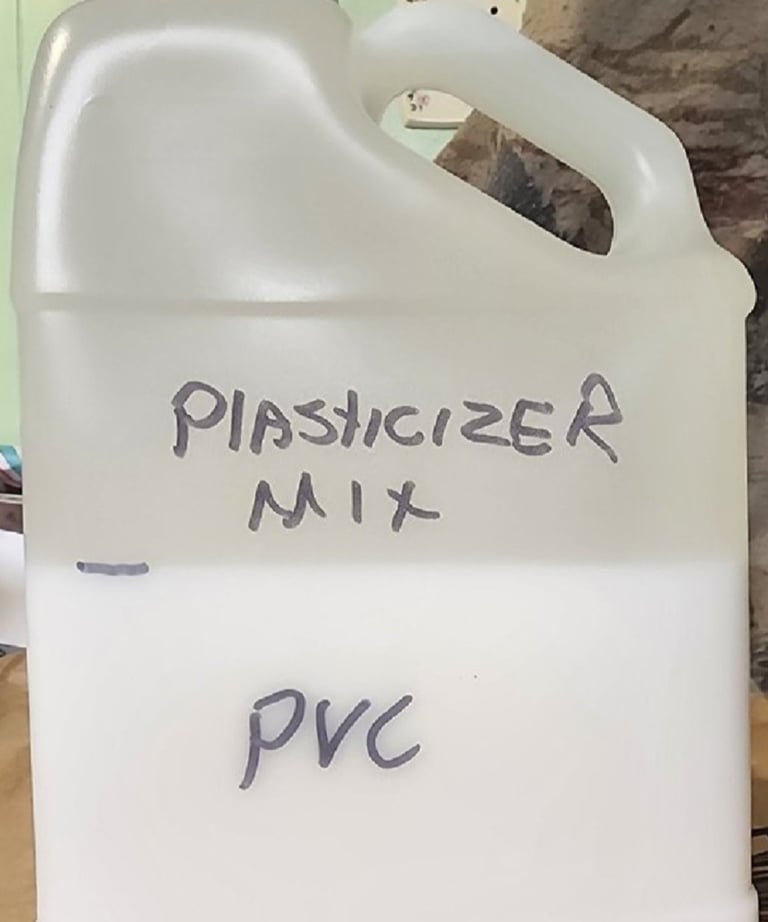
This is 1 gallon of RAW Non Phthalate Medium Shore A Soft Flexible PVC. The PVC pellets are suspended in Plasticizer Compound.
This is enough PVC to make a roll
.4mm thick x 1m wide x 30.5m Long
What Causes Plasticizer Migration in PVC
Plasticizers are chemicals that keep PVC soft and flexible, but they don’t stay put. Over time, they leak out of the plastic, causing everything from sticky car dashboards to cracking medical tubing.
The good news? Once you understand the six main triggers for plasticizer migration, you can predict and prevent these failures. Temperature and humidity play major roles, but the type of plasticizer and what the PVC touches matter just as much.
Temperature
Heat is the number one cause of plasticizer migration because it gives plasticizer molecules more energy to move around and escape. When PVC gets hot, the polymer chains expand and create bigger gaps for plasticizers to slip through.
Most plasticizer migration doubles in speed for every 10°C (18°F) increase in temperature. That’s why car interiors get sticky in summer but stay fine in winter.
Humidity and Moisture
Water accelerates plasticizer migration by creating pathways for the chemicals to travel through the PVC. Moisture acts like a carrier that helps plasticizers move from inside the material to its surface.
High humidity environments can increase migration rates by up to 50%. This explains why PVC products deteriorate faster in bathrooms or tropical climates than in dry environments.
Some plasticizers are actually water-soluble, meaning they dissolve in water and wash away completely. Once they’re gone, the PVC becomes brittle and cracks.
PVC Polymer Composition
The type of PVC resin you’re using determines how tightly it holds onto plasticizers. Rigid PVC formulations with higher molecular weights create tighter networks that trap plasticizers better.
Lower quality PVC resins have more irregular structures with larger gaps between polymer chains. These gaps give plasticizers easy escape routes.
The processing history also matters. PVC that’s been overheated during manufacturing has damaged polymer chains that can’t hold plasticizers effectively.
Compatibility with PVC
Not all plasticizers mix well with PVC, and poor compatibility is a major cause of migration. Compatible plasticizers dissolve uniformly in the PVC matrix and stay put, while incompatible ones separate and leak out.
You can spot compatibility problems when PVC surfaces become oily or develop a white bloom. This visible migration usually happens within weeks or months of production.
Molecular Weight (Size) of the Plasticizer
Smaller plasticizer molecules migrate faster because they slip through the PVC structure more easily. Large, bulky plasticizers get tangled in the polymer chains and stay trapped longer.
Low molecular weight plasticizers (under 300 g/mol) can migrate 10 times faster than high molecular weight ones (over 500 g/mol). That’s why manufacturers often choose larger plasticizers for products that need long-term stability.
The trade-off is that larger plasticizers don’t soften PVC as effectively. You need more of them to achieve the same flexibility, which increases costs.
Contact with Other Materials
Direct contact with certain materials pulls plasticizers out of PVC through absorption or chemical attraction. This contact migration can happen even at room temperature with no other stress factors.
Contact with Adhesives
Adhesives are notorious for extracting plasticizers because they’re designed to be chemically aggressive. The solvents in many adhesives dissolve plasticizers on contact, creating permanent bond failures.
Pressure-sensitive adhesives used in tapes and labels are especially problematic. They can extract enough plasticizer to leave permanent marks or cause the PVC to crack.
Contact with Polymers or Foams
Other plastics and foam materials can absorb plasticizers like sponges. Polystyrene, polyurethane foam, and rubber are the worst offenders because they have chemical structures that attract plasticizers.
When PVC wire insulation touches polystyrene packaging, plasticizers migrate into the foam within days. The wire becomes brittle while the foam turns soft and deformed.
Food and Packaging Contacts
Fatty foods pull plasticizers out of PVC packaging through a process called lipophilic extraction. Oils, butter, and meat are particularly effective at extracting these chemicals.
This migration poses health risks since many plasticizers aren’t safe for consumption. That’s why most countries now restrict which plasticizers can be used in food-contact PVC.
Even dry foods can cause problems. The surface tension between PVC and certain food particles creates micro-channels that plasticizers travel through.
Reference;
BASTONE Plastics and Chemical Co.
I verify my info through Plastics mfgs, plasticizer mfgs, and Chemical companies.
Not a bunch of propaganda made up to fool you, All info on this site has been verified through at least two sources.
Materials
Phthalate, Non phthalate, Polyolefin, and TPU
Phthalate mixes were banned in food products, Medical products, and in children's Toys, and a few others. But not all squeaks. Many Customs still have phthalate plasticizers.
Non Phthalate, well some like it and some don't, it's a matter of preference.
Polyolefin; (Pvc is pretty stretchy by itself, but in recent years people have mentioned that they want something a little more stretchy, so the manufactures answered with a compound containing polyolefin, polyolefin (polyurethane) is added to the pvc mix prior to the plasticizer mix, this gives the pvc base material a higher gloss and is more pliable. The higher the poly content, the more stretchy the material gets, so for example; a Pvc base squeak with a poly/pvc mix of 60% poly to 40% Base pvc, this adds approx. 1/2" of total stretch to the material (this depends on plasticizers and etc. too) So the new materials that are so crazy stretchy and are environmentally friendly are 90+% poly. This comes with issues of its own, for every 10% poly added, it reduces average engineered longevity by 5%, it has a good cold tolerance, but a bad high temperature tolerance, It also reacts differently to solvents.
TPU Thermoplastic Polyurethane; High Grade TPU has a good resistance to temperature, abrasion, penetration, wear, and is non toxic. TPU also comes with some negative aspects, such as Cost, High grade TPU costs 3 to 4 times more than normal pvc and has a shorter life span, environmental degradation, TPU also has a low tolerance for UV radiation.
The key here is High Grade TPU... If the company you're dealing with has a history of short cuts. (Be careful) Same goes with the Material...
Some of the new squeaks that have been bred with in the last few years are bred from a high polyolefin content PVC, and to make it even worse, the colorant used is an alcohol based paint or dye.
So to break this down, the high poly content PVC has a much shorter engineered longevity and has a lower tensile strength. It is very stretchy, but the down fall is that once the material reaches it's maximum stretch threshold, it will fail.
And since it's high in poly content, the Plasticizer is more vulnerable.
Alcohol-based paints and dyes can react with chlorinated water. The alcohol component acts as an organic solvent that, when mixed with chlorinated water, can lead to chemical reactions, discoloration, or degradation of the paint or dye, and since Alcohol degrades PVC, the underlying surface already has plasticizer damage leading to premature degradation.
The PVC our Squeaks are made from is known as Flexible pvc.
Aged = A material that has been opened, not in original package and has been inflated.
Contaminated = A material that has come in contact with dust, bodily fluids, sweat, plant residue, soaps, solvents, adhesive, Hight or low temperatures, UV Radiation and etc.
Let's be serious, if you have a squeak that has been around and needs cleaning, it would be nice to know what the cleaner you purchased will actually do...
There is no perfect soap, all soaps contain something that's not good for plasticizers, but there are some that are better than others.
So look for soaps that are more gentle and have less surfactants, also stay away from Lye based soaps and detergents.
We use a inexpensive shampoo with natural additives. when diluting it 4:1 (4 parts water 1 part soap) it provides a good cleansing ability without causing plasticizer issues.
** Diluting shampoo at a ratio of 4 parts water to 1 part shampoo has no significant harmful effects on flexible PVC plasticizer. Flexible PVC (polyvinyl chloride) is chemically stable and resistant to mild surfactants, water, and soapy solutions.
Safe cleaning: The surfactant concentration is low and non-reactive, meaning it will safely clean the surface or interior of the PVC without dissolving, cracking, or weakening it.
No chemical breakdown: Standard cosmetic ingredients and mild detergents do not act as solvents on PVC.
Safe cleaning: The surfactant concentration is low and non-reactive, meaning it will safely clean the surface of the PVC without dissolving, cracking, or weakening it.
No chemical breakdown: Standard ingredients and mild surfactants do not act as solvents on PVC.
Commercially made Shampoo is already certified and has been test for health risks...
How to Clean Safely
For safe cleaning, use warm water and a mild non detergent soap
Dilute: Mix a few drops of soap in warm water, if using a spray bottle, dilute at a ratio of at least
4:1 {4 parts water to 1 part soap}
Gently Wash: Wipe the PVC surface gently using a soft microfiber cloth.
Rinse thoroughly: Always follow up by rinsing with clean fresh water, Keep in mind, most municipal water supplies contain high amounts of chlorine.
Air Dry: Allow the squeak to dry in a well-ventilated area.
Chlorine
While pvc is made with chlorine, plasticizers can be washed from the base material using chlorine (bleach) as a washing agent.
Some damages caused by chlorine (Bleach)
Oxidation: High concentrations of chlorine (such as in municipal tap water, swimming pools, or bleach) aggressively oxidize the organic compounds that make up plasticizers.
Leaching: Once these bonds are degraded, the plasticizer molecules lose their ability to properly space out the rigid PVC polymer chains. Consequently, the plasticizer escapes the material and migrates into the surrounding fluid or air.
Embrittlement: The loss of the plasticizer causes the PVC chains to pack tightly together once again. This causes the material to lose its flexibility, leading to hardening, shrinkage, and micro-cracking.
The higher the chlorine concentration and water temperature, the faster the plasticizer will degrade, such as in swimming pools in the summertime.
When washing flexible PVC, avoid harsh chemicals and strong degreasers, as they strip the material's plasticizers and cause it to become stiff, brittle, and prone to cracking. Always steer clear of the following:
Solvents & Thinners: Acetone, nail polish remover, gasoline, mineral spirits, & Hydrogen Peroxide.
Strong Alcohols: Pure ethanol, isopropanol, isopropyl alcohol, and methanol can dry out the material.
Harsh Cleaners: Bleach, ammonia, and concentrated window cleaners.
Abrasives: Scouring powders, magic erasers, and stiff brushes.
Surfactants: Surfactants break down oils and lift them from the surface, thus causing plasticizer to leach from the material.
Soaps to stay away from are those that contain high amounts of surfactant, like detergents.
Surfactants with high lipophilic (oil-loving) properties, especially non-ionic or specific ionic types, excel at extracting or solubilizing plasticizers from plastics. By breaking surface tension and penetrating polymer matrices, these surfactants dissolve and pull out additives like phthalates and adipates.
The most effective surfactants for extracting plasticizers include:
Non-ionic Surfactants: Materials like Triton X-114, Tween-20, Decyl Glucoside, CoCo Glucoside, Lauramine Oxide, Caprylyl/capryl Glucoside (polysorbate 20), and Tween-80 (polysorbate 80). Because they lack a charge but are highly amphiphilic, they are remarkably efficient at solubilizing oily plasticizer molecules into water.
Anionic Surfactants: Detergent-type surfactants such as Sodium Dodecyl Sulfate (SDS) and linear alkylbenzene sulfonates (LAS).
Cationic Surfactants: Quaternary ammonium compounds like Cetyltrimethylammonium bromide (CTAB).
Plasticizer Extraction: Decyl Glucoside, Coco Glucoside, Lauramine Oxide, and Caprylyl/capryl Glucoside are polar and contain lipophilic (fat-loving) chains, they have a high affinity to dissolve or attract PVC plasticizers. Over time, these surfactants draw the plasticizer out to the surface and wash or rub away, leaving the flexible PVC stiff and prone to cracking.
Material Embrittlement: As the plasticizer is leached, the distance and mobility between the PVC polymer chains are reduced. The loss of volume results in decreased elongation at break and a noticeable reduction in flexibility.
Surface Degradation & "Tackiness": As the plasticizer blends with the surfactant and moves to the surface, it can cause the PVC to feel sticky or oily. When the substance evaporates or is rinsed off, the surface may become dull, crazed, or rough.
Chemical Breakdown (Dehydrochlorination): Exposure to amine-based or alkaline surfactants (like Lauramine Oxide) can accelerate the thermal degradation of PVC by stripping away chlorine and causing the material to rapidly discolor (turning yellow or brown).
Phenoxyethanol acts as a solvent and aggressive extractant on flexible PVC. When applied to aged, contaminated PVC, it dissolves and leaches existing plasticizers (like phthalates). This extracts the softening agents, causing the PVC to permanently stiffen, embrittle, shrink, and crack as it off-gasses and degrades.
Decyl Glucoside & Coco Glucoside: These non-ionic surfactants consist of sugar molecules (glucose) attached to natural fatty alcohols. They will readily emulsify and wash away the "bloomed" (tacky) plasticizer residue from the plastics' surface. By removing this surface layer, they disrupt the chemical equilibrium of the material, drawing even more plasticizer out of the PVC core.
Caprylyl/Capryl Glucoside: This is a shorter-chain alkyl polyglucoside that is highly effective as a solubilizer. Because of its shorter molecular chain, it has high penetrating power and can act as a mild solvent for organic additives. It is highly aggressive at dissolving and lifting aged plasticizers off the PVC surface, leading to rapid hardening of the material.
Lauramine Oxide: This amphoteric surfactant has excellent grease-cutting and degreasing properties. It will vigorously break down and lift oily migrated plasticizers. If the environmental conditions are basic (high pH), it can act as a phase-transfer catalyst, potentially allowing hydroxide ions to chemically degrade the PVC through a dehydrochlorination reaction.
Practical Implications:
If you use these surfactants to clean contaminated, aged squeaks, be aware that you are permanently removing the agents that keep the plastic flexible. While the items may feel clean initially, the loss of plasticizer will cause the flexible PVC to become stiff and structurally compromised.Sodium benzoate has no plasticizing properties and is generally insoluble in PVC plasticizers. When introduced to aged, contaminated flexible PVC, it acts as an inactive, solid filler. It provides no structural rejuvenation, cannot extract embedded contaminants, and can cause surface blooming, whitening, and embrittlement as the particles push plasticizer chains apart.
Soaps & Surfactants
There has been a lot of talk lately about a specific cleaner endorsed by a few well known Squeak companies, ok lets look at it, This information has also been verified..
I've Highlighted the surfactants and solvents that are detrimental to flexible pvc plasticizer.
I also made contact with a well known checmical company to ask about the effects of the solution on flexible pvc plasticizers at 70°F/21°C and above.
This is where we are, if you search the effects of this stuff on pvc, you get good results..
But when you search for information on aged, contaminated flexible pvc, which is what you are working with. If the squeak was new or clean, you wouldn't need to clean it.. So this is where it takes a big turn.. Plus if you add in realistic temperatures, it gets down right scary. I verified my findings with several well known polymer labs.
Squeaky *****
Base
Water (Aqua)
Cleaning System
Decyl Glucoside
Coco Glucoside
Caprylyl/Capryl Glucoside
Lauramine Oxide
Preservation
Phenoxyethanol
Sodium Benzoate
Stability & Performance
Disodium EDTA
pH Balance
Boric Acid
Sodium Borate
What kind of surfactants are These? They are mild cleansers. Specifically, Decyl Glucoside, Coco Glucoside, and Caprylyl/Capryl Glucoside are non-ionic surfactants, while Lauramine Oxide is an amphoteric/non-ionic amine oxide surfactant.
Does Decyl Glucoside, Coco Glucoside, Caprylyl/Capryl Glucoside, and Lauramine Oxide degrade flexible PVC Plasticizer?
Yes, Decyl Glucoside, Coco Glucoside, Caprylyl/Capryl Glucoside, and Lauramine Oxide actively extract and deplete flexible PVC plasticizers. While they do not chemically break down the plasticizer molecules themselves, these surfactants promote severe plasticizer leaching and migration, causing flexible PVC to harden, crack, or become brittle.
However, at temperatures above 80°F/26.6667°C, direct contact with these liquid surfactants can increase thermal molecular mobility and act as extracting agents, accelerating plasticizer migration, surface marring, or tackiness.
How does Phenoxyethanol effect aged, contaminated flexible PVC Plasticizer?
Phenoxyethanol acts as an active aromatic solvent that with direct exposure to phenoxyethanol can penetrate the flexible PVC matrix, leading to potential swelling, softening, or extraction of loosely bound low-molecular-weight additives. Depending on the plasticizer and additive package used the effects can range form minor to rapid degradation.
In Temperatures above 80°F/26.6667°C Phenoxyethanol can accelerate plasticizer migration.
You may want to sit down for this part;
These are the results when all of the ingredients are mixed together in a solution, like you would receive it from the company.
Total Effects; As a solution, How does this solution effect aged, contaminated flexible PVC Plasticizers..
When combined in a single aqueous mixture at temperatures above 70°F/21°C, these ingredients work together to accelerate the extraction and migration of flexible PVC plasticizers, which will eventually lead to the vinyl becoming brittle, losing its flexibility, and potentially cracking or shrinking.
When separate, many of these ingredients are relatively mild.
However, when formulated together into a single liquid, they create a highly effective system for degrading flexible vinyl:
Enhanced Solubilization Micelles: The combination of alkyl glucosides (Decyl, Coco, Caprylyl/Capryl) and Lauramine Oxide creates a dense network of mixed surfactant micelles. At temperatures above 80°F, these micelles can rapidly encapsulate and carry away hydrophobic plasticizers (like phthalates or adipates) from the surface of the PVC.
The Phenoxyethanol "Gateway" Effect: Phenoxyethanol acts as a mild organic solvent. At elevated temperatures, it easily penetrates the outer layer of the PVC matrix, causing the polymer chains to slightly swell. This "loosens" the structure, making it significantly easier for the surfactant micelles to reach deeper into the plastic and pull plasticizers out.
Electrolyte-Driven Migration: The inorganic salts and chelators (Sodium Benzoate, Boric Acid, Sodium Borate, and Disodium EDTA) increase the ionic strength of the water. This forces the hydrophobic plasticizers to migrate outward toward the surface to escape the highly ionic water, where they are immediately swept away by the surfactants.
Expected Physical Outcomes
Exposure Stage Material Status Physical Observation;
Short-Term (Days to Weeks) Minor Swelling
The PVC may feel slightly softer or show a temporary tacky surface residue.
Medium-Term (Weeks to Months) Plasticizer Loss,The plastic loses its oily sheen, begins to stiffen, and may slightly discolor.
Long-Term (Months to Years) Matrix Embrittlement Significant shrinkage occurs, and the PVC becomes rigid, prone to cracking, and fragile.
The Combined Synergy at >80°F/26.667°C
Applying this formulation to a 0.4mm aged, contaminated flexible PVC at temperatures above 80°F (26.7°C) creates a high risk of accelerating the material's physical degradation. While the raw chemical base of (rigid PVC) is highly resistant to these ingredients, thin, aged, flexible vinyl presents unique structural vulnerabilities.The specific physical and chemical effects of this interaction include:
1. Stripping of Critical Plasticizers
Flexible PVC achieves its pliability through heavily incorporated liquid plasticizers (typically phthalates).
The Surfactant Effect: Decyl Glucoside, Coco Glucoside, and Caprylyl/Capryl Glucoside are high-efficiency degreasers and solubilizers.
The Result: These surfactants will rapidly emulsify and strip away the protective surface oils, contaminants, and the PVC’s internal plasticizers. Removing these compounds from an already thin (0.4mm) matrix will permanently stiffen the material, making it brittle and highly prone to cracking.
2. Micro-Swelling and Macro-Softening
The Surfactant Migration: Lauramine Oxide and Phenoxyethanol possess both hydrophobic and hydrophilic characteristics, allowing them to easily penetrate the porous structure of aged plastic.
The Result: As these organic molecules wedge into the compromised polymer chains, they will cause local micro-swelling, distortion, and loss of tensile strength.
3. Accelerated Stress Cracking via Contaminants
The Cleaning Action: The surfactant network will dislodge and lift embedded surface contaminants.
The Consequence: For a stable substrate, this is ideal. However, on micro-fractured, aged PVC, stripping these structural impurities away exposes hidden microscopic physical voids. Combined with the localized swelling caused by the liquid, the thin 0.4mm sheet risks undergoing rapid environmental stress cracking (ESC), leading to tears or pinhole leaks.
4. Minimal Chemical Attack from the Buffer System
The Borate Effect: The Boric Acid and Sodium Borate buffer combo is chemically non-reactive and highly compatible with standard PVC surfaces.
The Exception: Because the PVC is already contaminated and aged, the basic nature of a borate solution could slightly saponify surface-level degraded PVC by-products, altering the surface color or optical clarity.
The problem here is that this Cleaner was made for "Rigid pvc", not our squeaks that are much more sensitive to harsh chemicals.
The results are pretty obvious...
I would like to know what actual testing was completed...
Protectants
non Aerosol Water Based Silicone Protectants
Such as 303 contain Silicone
303 Aerospace Protectant is a water-based emulsion. Its primary ingredients are deionized water and Polydimethylsiloxane (PDMS), a specialized silicone used to create a non-greasy, dust-repellent protective layer. It also contains ethoxylated surfactants, polyethylene glycol, and trace preservatives.
We use
Superior products on our squeaks, I've used it for many years with no negative results.
Superior super shine 2 has the same ingredients as 303 protectant except
polyethylene glycol.
Silicone protectants do not inherently trigger plasticizer leaching. In fact, they act as sacrificial barriers that prevent plastics from drying out. However, petroleum-based solvents in lower-quality aerosol silicone sprays can dissolve or extract the chemical plasticizers, which then migrate to the surface in as little as days to months depending on environmental heat and exposure
The Mechanics of Migration
The Culprit: The actual cause of the leaching is usually the cheap carrier solvents (such as kerosene or mineral spirits) used to aerosolize the silicone. These chemicals dissolve the plasticizer resins.
The "Drying" Effect: When the solvent evaporates, it pulls the plasticizer with it, causing the material to lose its flexibility and become brittle over time.
Silicone's Role: Pure silicone sits on top of the plastic and lubricates it, shielding the plastic from UV rays and moisture loss.
What Speeds Up the Process?
Heat: Elevated temperatures (such as a car dashboard baking in the Florida sun) accelerate the diffusion rate of plasticizers. Under extreme heat, migration can be visibly noticed in a few weeks.
Product Quality: High-quality protectants rely on water-based or pure medical-grade silicone formulas rather than harsh petroleum distillates. They do not extract plasticizers, and the protective film can last on the surface for up to 15 years in ideal conditions and Uses.
Applying a water-based silicone protectant to cleaned, aged, flexible PVC restores a temporary soft luster, blocks UV rays, and adds a moisture barrier.
Critical Effects on 0.4mm Thin PVC
No structural warping: Unlike solvent- or petroleum-based protectants, water-based silicone will not dissolve, swell, or warp ultra-thin 0.4mm PVC.
Surface-only protection: At 0.4mm, the PVC has a very small total volume of internal plasticizers. The protectant only coats the outer surface and cannot deeply penetrate to restore structural flexibility if the core is already brittle.
Micro-crack sealing: It fills microscopic surface imperfections caused by age, temporarily keeping external moisture out.
Reduced physical drag: The slick silicone layer reduces friction, lowering the risk of the thin material tearing when folded, rubbed, or handled.
Health Concerns with some surfactants, cleaners, and protectants;
Lauramine Oxide
Health Profile: This is a tertiary amine oxide used as a foam stabilizer, thickener, and cleansing agent. Regulatory groups like the EPA (under the Safer Choice program) and the CIR approve its use in both personal care and household items.
Risks: Like the glucosides, it can cause skin and severe eye irritation if not formulated or diluted properly.
Nitrosamine Concern: Lauramine oxide can be susceptible to nitrosation—a chemical process that can form nitrosamines (compounds linked to cancer).
Boric acid poses significant health risks if ingested, inhaled, or absorbed through skin. While generally safe for specific external uses (like vaginal suppositories or pest control) when used strictly as directed, swallowing it can cause poisoning, kidney damage, and reproductive issues.
Key Health Risks
Ingestion: Highly toxic if swallowed. It causes severe gastrointestinal distress, vomiting (sometimes blue-green in color), and diarrhea. Extreme ingestion can lead to "boiled lobster" rashes, kidney failure, and neurological issues like seizures or coma.
Skin & Eyes: Can be severely irritating to the eyes. Prolonged contact with broken skin allows it to absorb into the bloodstream, which has proven fatal in severe cases.
Inhalation: Breathing in boric acid dust can irritate your mouth, nose, and throat, potentially causing coughing, sore throats, or nosebleeds.
Reproductive Toxicity: Chronic, high-dose exposure is associated with reproductive and developmental toxicity, notably impacting fertility in animal studies
Sodium borate (borax) is a substance that poses significant health risks if ingested, inhaled, or absorbed. Health organizations, such as the Agency for Toxic Substances and Disease Registry (ATSDR), note that the threshold for toxicity is relatively low, particularly for vulnerable populations like infants and children.
Health Risks and Symptoms
Acute Ingestion: Consuming or getting in your mouth can lead to serious medical emergencies. Symptoms often begin with severe gastrointestinal distress, including vomiting, diarrhea, and abdominal pain. In severe cases, it can lead to organ failure or death.
Airborne Exposure: Inhaling borax dust can cause immediate irritation to the respiratory tract, affecting the nose, throat, and lungs.
Skin Absorption: While healthy skin provides a barrier, applying sodium borate to broken, scraped, or burned skin allows the chemical to enter the bloodstream more readily, potentially leading to systemic poisoning.
Sodium benzoate is generally recognized as safe (GRAS) by the FDA when consumed in small amounts. However, it may pose health risks for sensitive individuals, and high chronic exposure has been linked to pseudo-allergic reactions, inflammation, and cellular damage.
Health & Legal
Concerns
A common squeak cleaner recommended by some inflatable companies...
Squeaky *****
Are there any Health concerns with these chemicals used as a solution?
Yes, when used in liquid solutions, most of these chemicals have mild to moderate health effects primarily related to skin and eye irritation, with a few carrying specific toxicity concerns if misused or ingested.
Surfactants (Cleansers & Foaming Agents)
Decyl glucoside: Generally gentle and safe, but raw or high concentrations can cause mild skin or eye irritation.
Coco glucoside: Very mild, but can cause skin irritation or serious eye damage in concentrated forms.
Caprylyl/capryl glucoside: Slightly harsher than decyl or coco glucoside, can cause mild skin dryness and severe eye irritation.
Lauramine oxide: Acts as a skin and eye irritant; concentrated solutions cause burning or redness in eyes.
Preservatives & Additives
Phenoxyethanol: Safe in cosmetics at or below 1%, but higher amounts or sensitive skin can trigger irritation or eczema. Avoid use in infant products.
Sodium benzoate: Generally safe in small amounts, but can irritate skin or worsen asthma symptoms in sensitive people. It can form trace benzene (a carcinogen) if mixed with vitamin C under specific heat/light conditions.
Boric acid & Sodium borate (Borax): Toxic if swallowed or absorbed through broken skin. They are linked to hormone disruption and reproductive/developmental toxicity at higher exposures.
Disodium EDTA: Low toxicity to organs topically, but acts as a strong eye and skin irritant and enhances the skin penetration of other chemicals.
If contact with highly permeable soft tissues like sexual organs, these ingredients pose a significantly higher risk of severe irritation, chemical burns, and systemic absorption than they do on normal skin. Genital mucosal membranes lack the protective outer layer (stratum corneum) of regular skin, making them highly sensitive to chemical disruption.
High-Risk Compounds (Avoid Mucosal Contact)
Boric acid & Sodium borate: Highly toxic through mucous membranes. They are rapidly absorbed into the bloodstream through soft tissue, which can lead to systemic boron toxicity, organ damage, and reproductive harm.
Phenoxyethanol: Strongly restricted near mucous membranes. It is a known cellular irritant that can cause stinging, burning, and inflammation of delicate tissues, and it presents a risk of central nervous system depression if absorbed systemically by infants.
Lauramine oxide: An aggressive surfactant that can strip the protective lipid barrier of soft tissue, leading to chemical irritation, burning sensations, and micro-tears in the membrane.
Moderate-to-High Risk (Disruptive Additives)
Disodium EDTA: Increases tissue permeability. While not highly toxic on its own, it opens up the cellular barriers of soft tissue, allowing the other irritating chemicals in the solution to penetrate much deeper and faster.
Sodium benzoate: Can cause localized burning, redness, and allergic contact dermatitis on sensitive mucosal surfaces.
Moderate Risk (Surfactants / Cleansers)
Caprylyl/capryl glucoside: The most irritating of the alkyl glucosides listed. It can cause severe stinging, inflammation, and cellular stress to soft tissues.
Decyl glucoside & Coco glucoside: While marketed as "gentle" or "natural" for standard skin, they are still detergents. On sexual organs, they can strip natural moisture, alter the delicate local pH, disrupt the natural microbiome, and trigger contact allergy or irritation.
Would the exposure be worse in high temps above 80F and the human skin is sweaty?
Yes, the exposure would be significantly worse. High temperatures above 80°F (26.6°C) combined with sweaty skin dramatically accelerate chemical absorption, tissue irritation, and systemic risk.
When the human body is hot and sweating, multiple biological changes occur that turn the skin and soft tissues into a much more vulnerable barrier.
1. Massive Increase in Skin Permeability
At temperatures above 80°F (26.6°C), the body initiates thermoregulatory vasodilation. Blood vessels close to the surface of the skin and sexual organs widen, increasing localized blood flow. This rapid blood circulation acts like a vacuum, pulling absorbed chemicals away from the tissue surface and pumping them straight into the bloodstream much faster than at cooler temperatures.
2. Sweat Dissolves and Traps the Chemicals
Sweat is primarily water and salt, which acts as a powerful solvent.
Enhanced Dissolution: Water-soluble compounds like Sodium benzoate, Disodium EDTA, Boric acid, and Sodium borate dissolve entirely into the sweat layer, spreading rapidly across the tissue.
The "Occlusion Effect": In hot weather, clothing or skin folds trap the sweaty, chemical-laden moisture against the body. This creates an unintentional wet compress (occlusion) that forces the chemicals deeper into the delicate mucosal tissue of the sexual organs.
3. Hyper-Hydration and Weakening of the Barrier
Sweat over-hydrates the outer layers of the skin, causing the cells to swell and loosen their tight structure.
For standard skin, this over-hydration disrupts the protective lipid barrier.
For already-vulnerable soft tissues (like sexual organs), the presence of sweat and heat makes the membrane highly unstable.
How Specific Ingredients React to This Environment
When heat and sweat weaken the tissue, the specific chemicals mentioned become much more destructive:
The Glucosides & Lauramine Oxide: Surfactants penetrate deeper when the skin is warm. Once inside the swollen tissue cells, they strip away the natural lipids much faster, causing immediate, intense chemical burning, itching, and redness.
Disodium EDTA: Because heat increases cellular permeability, EDTA will act with maximum efficiency, tearing open the remaining cellular defenses and paving the way for other toxins to flood the tissue.
Boric Acid, Sodium Borate, & Phenoxyethanol: The risk of systemic poisoning skyrockets. With dilated blood vessels and sweat-softened membranes, these reproductive and neurological toxins are rapidly absorbed into the bloodstream, bypassing the body's natural topical defenses entirely
(National Institute of Medicine)
Repeated exposure completely shifts the risk profile of these ingredients from temporary irritation to cumulative toxicity and sensitization.
The primary health risks change in three major ways over time:
1. Development of Allergic Contact Dermatitis (ACD)
While surfactants like decyl glucoside, coco glucoside, and caprylyl/capryl glucoside are highly praised as mild alternatives to harsher soaps, they are known to cause a sensitization effect with repeated exposure.
The Mechanism: Repeaded use gradually breaks down your skin's natural lipid barrier. Your immune system starts recognizing these molecules as foreign invaders, triggering a lifetime allergy.
Symptoms: What once felt fine will suddenly trigger an itchy, flaking, inflamed skin rash 48 to 72 hours after any future exposure.
Cross-Reactivity: If you develop an allergy to decyl glucoside, your body will likely cross-react to coco or caprylyl glucoside as well.
2. Cumulative Organ Bioaccumulation
Most of the preservatives and additives listed do not exit your system immediately. Repeated exposure allows them to build up faster than your body can detoxify them.
Boric acid & Sodium borate: The human body eliminates boron very slowly. If repeated exposure to damaged skin or ingested in tiny trace amounts, it builds up in organs. Long-term toxicity from bioaccumulation is heavily linked to endocrine disruption, testicular atrophy, and developmental damage.
Phenoxyethanol: Repeated exposure has been flagged for cumulative systemic toxicity, specifically targeting the nervous and immune systems, which is why strict concentration limits (under 1%) are legally enforced.
3. Chronic Penetration and Irritation Cycle
Disodium EDTA: This molecule acts as a "penetration enhancer" by binding to minerals and loosening cellular tight junctions. While safe on its own in tiny amounts, being exposed repeatedly means you are permanently boosting your skin's absorption rate. It pulls the other irritating surfactants and preservatives deeper into your tissues with every use.
Lauramine oxide: Repeated skin contact causes chronic lipid depletion, transforming mild, temporary dryness into severe, chronic eczema and compromised skin immunity.
Legal Concerns.
Some Chemicals are banned in some Countries and in some states in the U.S.
pH & Performance Balancers
(Boric Acid, Sodium Borate)❌ Banned / Restricted
Classified as reproductive toxins. Banned in EU leave-ons; banned globally for children under 3 and broken skin.
Severe Chemical Irritation (Surfactant Burn)
Lauramine Oxide Hazard: This ingredient is a strong foam-boosting surfactant primarily used in dish soaps, all-purpose cleaners, and heavy-duty detergents. Genital skin and internal mucous membranes are highly permeable and sensitive. Lauramine oxide will strip the protective lipid barrier of intimate tissue, causing an intense burning sensation, redness, inflammation, and potential chemical burns.
Microbiome Disruption: The surfactants and preservatives (Phenoxyethanol and Sodium Benzoate) will eliminate beneficial local bacteria (like Lactobacilli). This disruption significantly increases the risk of Bacterial Vaginosis (BV), yeast infections, and urinary tract infections (UTIs).
2. High Risk of Rapid Borate Poisoning (Systemic Toxicity)
Mucosal Absorption: While healthy adult outer skin blocks a portion of Boric Acid and Sodium Borate, mucous membranes (the vagina, urethra, and penile tissue) absorb borates rapidly and efficiently.
The Child Danger: Children have a much higher surface-area-to-body-mass ratio. If this solution touches a child's sex organs, the borates will pass directly into their bloodstream. This can cause acute borate poisoning, leading to symptoms like severe vomiting, diarrhea, a bright red skin rash (resembling a sunburn), seizures, and kidney failure.
Reproductive Risks: Both international registries and the Healthline Toxicity Archives note that systemic borate exposure acts as a reproductive toxin that can impair fertility and cause cellular damage to reproductive organs over time.
3. Clear Distinction from Medical Vaginal Suppositories
Not the Same as Medical Boric Acid: While adult women sometimes use isolated, dry boric acid capsules (suppositories) to treat severe yeast infections, those are medical-grade solids used deep internally without harsh industrial surfactants. Even then, medical guidelines from the Cleveland Clinic explicitly state they are never safe for children, unsafe during pregnancy, and require individuals to entirely avoid oral sex due to oral toxicity risks.
© squeaksrus 2025.
All rights reserved.
Site Disclaimer;
All info on this website has been verified by no less than two certified sources. I myself work with flexible pvc and have actual training and experience working in this field.
They are not for human consumption and can pose choking or poisoning hazards to children and pets.
Flexible plastics often contain phthalates, dioxin, and heavy metals like lead. These can leach into the environment, potentially harm all that come in to contact with it.
Some flexible plastics can melt or cause a "gooey mess" if mixed with incorrect substances such as but not limited to; Plasticizers, Degreasers, Solvents, Adhesives, and High heat.
Products should be filled with air that contains 21% oxygen
California Proposition 65 warnings for flexible PVC products are required due to the presence of plasticizers like DEHP and DINP, as well as additives like titanium dioxide. These specific chemicals are added to make plastic soft and are known to cause cancer or reproductive harm.